
About the Trail

The Fibrey

A Walk Through Four Centuries

The St. John’s Heritage Trail runs through the streets laid out in the early 1700s, past warehouses, churches, shops and houses that survived fire, earthquake and hurricane. Twenty-seven stops, each with a QR code linking to its own page of history and photographs.

The trail moves beyond the plantation narrative to show St. John’s as a working city, built by skilled enslaved labour and, after emancipation in 1834, by Antiguan carpenters, bricklayers and masons. It is a story of resilience, enterprise, migration, faith and community.

Ready when you are

Begin at the Quay


The trail starts on lower Redcliffe Street, among the old warehouses by the water, and ends ninety minutes later at Government House.

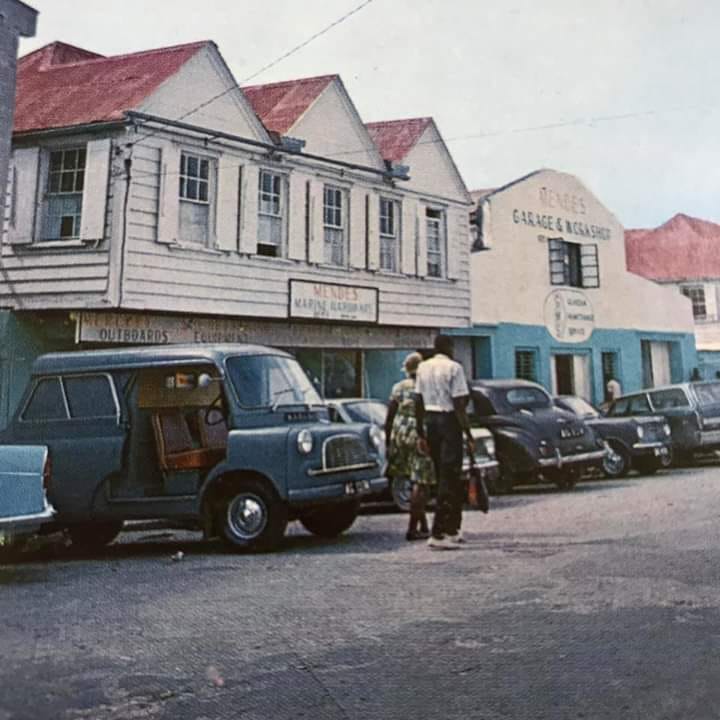
1 Lower Redcliffe Street, St. John's, with its warehouses of stone and timber

First stop · Redcliffe Street

Lower Redcliffe Street

Called Ratcliffe Street on maps from the 1700s, this is one of the older parts of the city: warehouses with stone ground floors and ornate timberwork above, renovated in the 1980s and renamed Redcliffe Quay.

Start the trail


See all 27 stops Download the map (PDF) Read the full history

Credits

Who Made the Trail

Written and designed by

  • Desley Gardner Museum of Antigua and Barbuda
  • Robbie Kerr Adams Architecture
  • Dr. Susan Lowes Museum of Antigua and Barbuda

Website design by

With support and material from

The information in this walking tour came from multiple sources, some of which are listed in the Bibliographical References. In addition, for their material, guidance, and support, we would particularly thank the following, in alphabetical order: Barbara Arrindell, Walter Berridge (Museum of Antigua and Barbuda), Paul C. Cloyd, Alex Coode (Coode Conservation), Lisa Farara (Antigua Distillery), Sarah Fuller, Avril Hector (Museum of Antigua and Barbuda), Kingsley Lewis, Agnes Meeker, Terrence Nunes (Nunes Hardware), and Dr. Reginald Murphy (Museum of Antigua and Barbuda).

And thanks to the Museum for providing many of the photographs, and to Myra Piper, Research Librarian at the Museum, for her support in searching the Museum’s collection.

Produced by the Commonwealth Heritage Forum under its Queen Elizabeth II Platinum Jubilee Commonwealth Heritage Skills Training Programme, funded by The Vinehill Trust.

  • Commonwealth Heritage Forum
  • The Vinehill Trust
  • Museum of Antigua and Barbuda
  • The Commonwealth

The full acknowledgements and the sources this trail draws on are on the credits page.