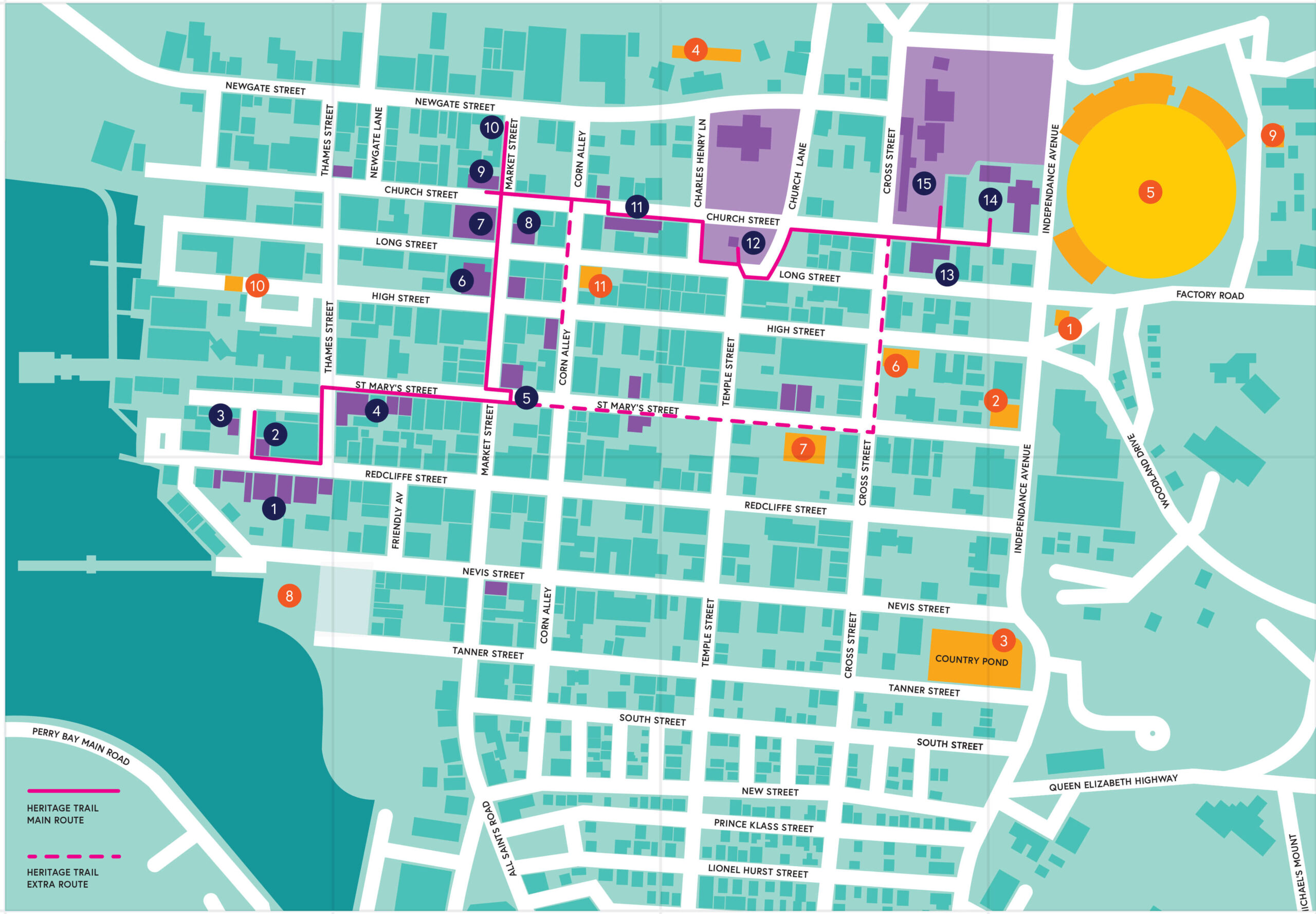
This walking tour explores the layered history of St. John’s, showing how commerce, migration, faith and craftsmanship shaped Antigua and Barbuda’s capital. Twenty-seven stops, roughly ninety minutes on foot, beginning at Redcliffe Quay.
The route follows the grid laid out in the early 1700s, with broad avenues running east to west and narrower cross streets running north to south. Most of what you will see was built or rebuilt after the fires of 1666, 1769 and 1841 and the earthquakes of 1745 and 1843, repaired in wood and masonry and largely faithful to the original designs.
Getting Started
The trail begins at Redcliffe Quay and ends at Government House, following the main route marked in pink on the map. Allow about ninety minutes at a steady pace, longer if you stop to explore. The dashed route links the additional sites.
Scan as You Go
Each stop on the printed map carries a QR code. Scan it with your phone camera to open that building's page, with its full history and archive photographs. No app required.
Practical Notes
Most of the trail is on pavement, with some uneven surfaces and gentle slopes near the Cathedral. Bring water and sun protection. Several buildings are private residences or working offices, please view them from the street.
Key Buildings
Fifteen stops along the main route, in walking order.
1
Lower Redcliffe Street
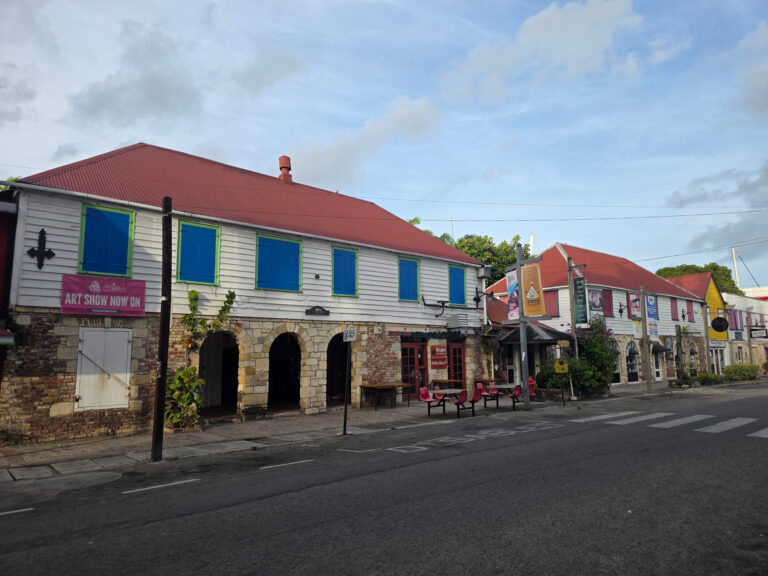
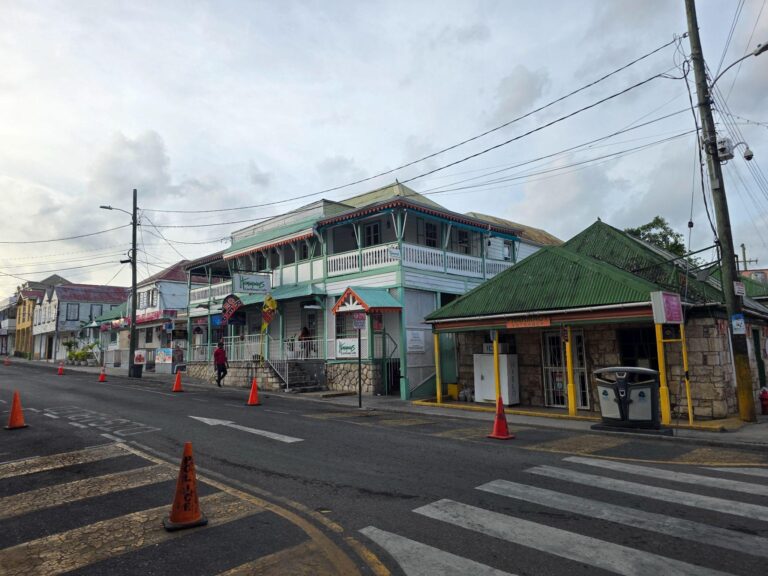
Called Ratcliffe Street on maps from the 1700s, lower Redcliffe Street is one of the older areas of St. John’s, characterised by warehouses with stone ground floors and more ornate timberwork above. These buildings…
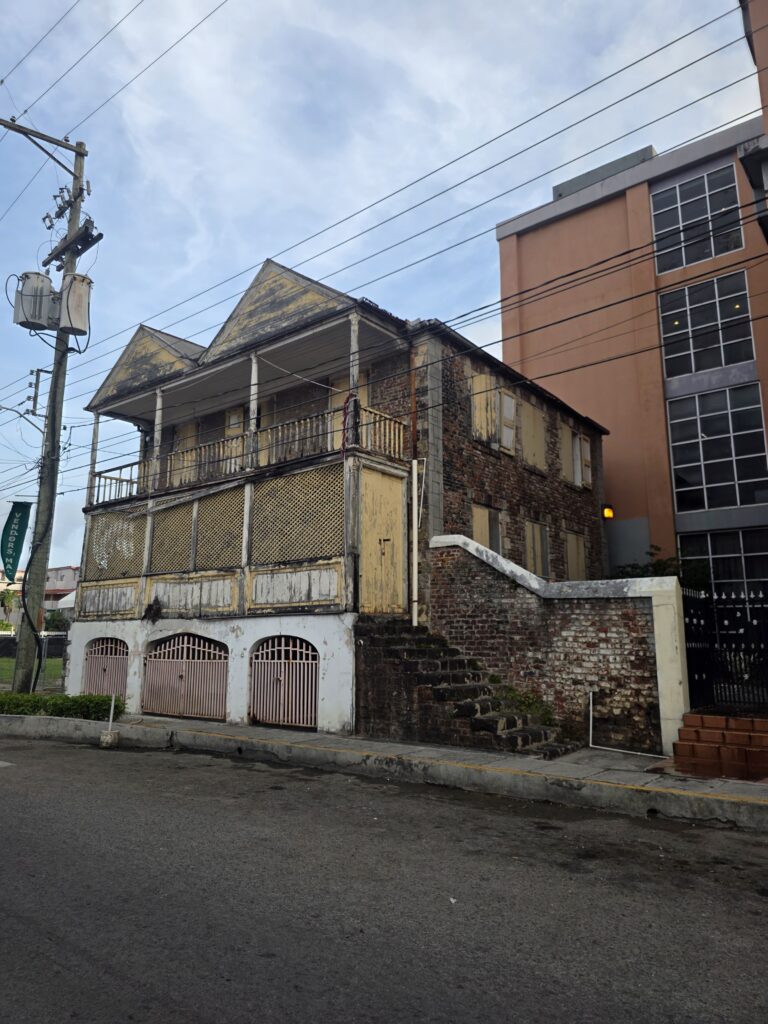
In the 1850s, this building housed the first Catholic Church, with the ground floor used as a chapel and the upstairs as the Presbytery, serving the newly arrived Portuguese. Since then it has had…
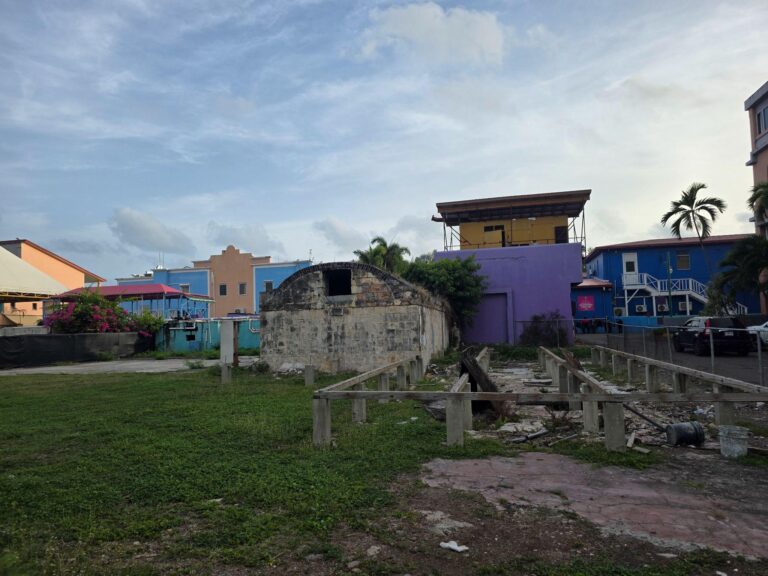
Antigua was prone to multi-year droughts. To provide water to the population, the British constructed an elaborate water system, a combination of connected ponds, dams, reservoirs and catchments. Cisterns were commonly used to collect…
The building that now houses Hemingway’s was originally owned by Emmanuel Oliver Camacho. The house had rooms for his 12 children and for the maids who looked after them. When Olive Jardine purchased the…
Market Street, originally called Scotch Row, was named for the Scots who arrived in Antigua in the 1800s and came to own most of the larger stores in town. After World War I, they…
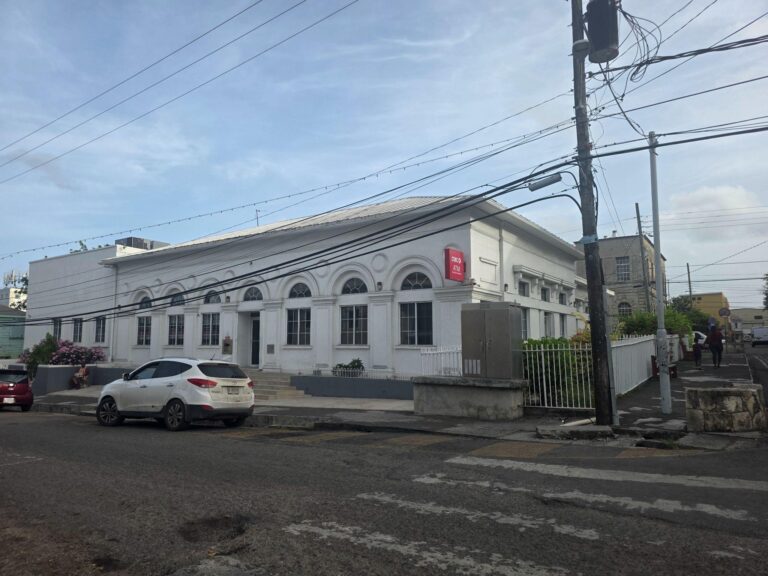
The Colonial Bank was established in 1836 in a building on Newgate Street. In 1925, the Colonial Bank was merged with the Anglo-Egyptian Bank and the National Bank of South Africa and reincorporated into…
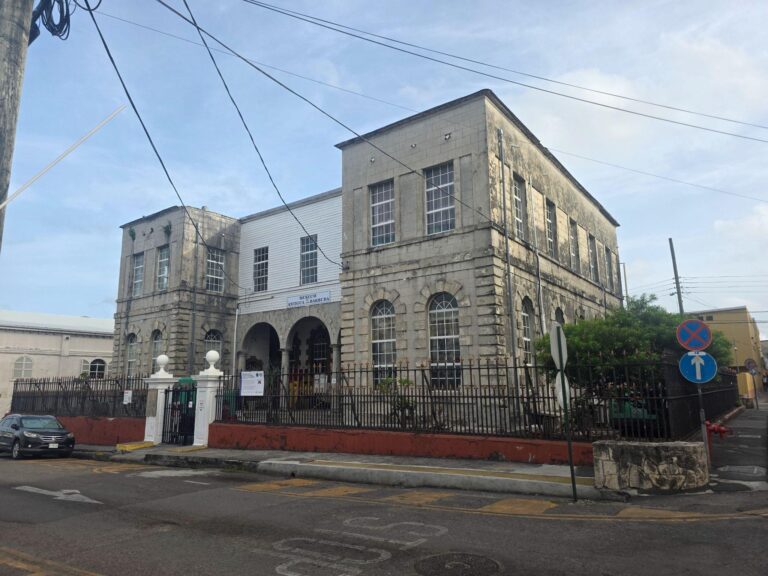
The Museum is housed in the old Court House, constructed in 1747 and the oldest building still in use in the city. The building was seriously damaged in the 1843 earthquake and the support…
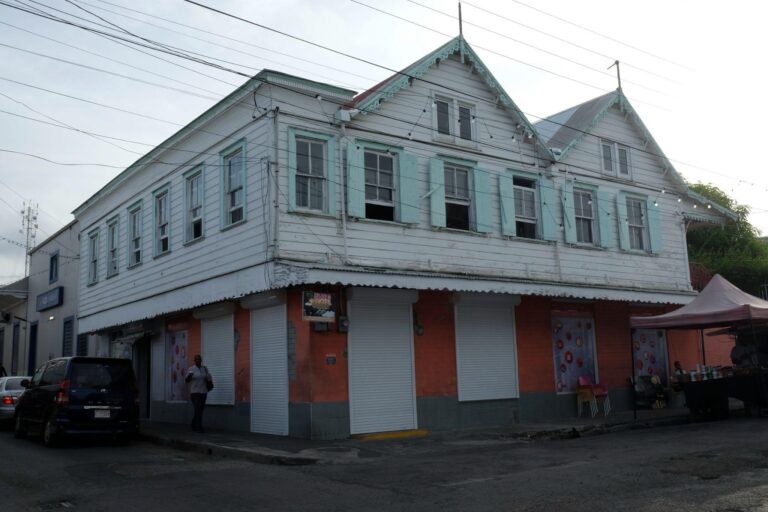
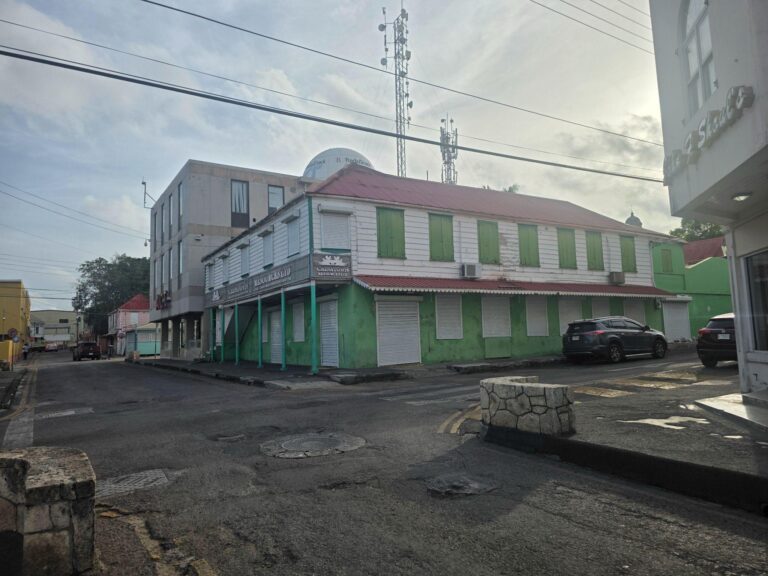
Manuel Dias was a part of the group of Portuguese who migrated to Antigua after indentureship and bought this building in 1917. The family operated a general store before specialising in liquor. The building…
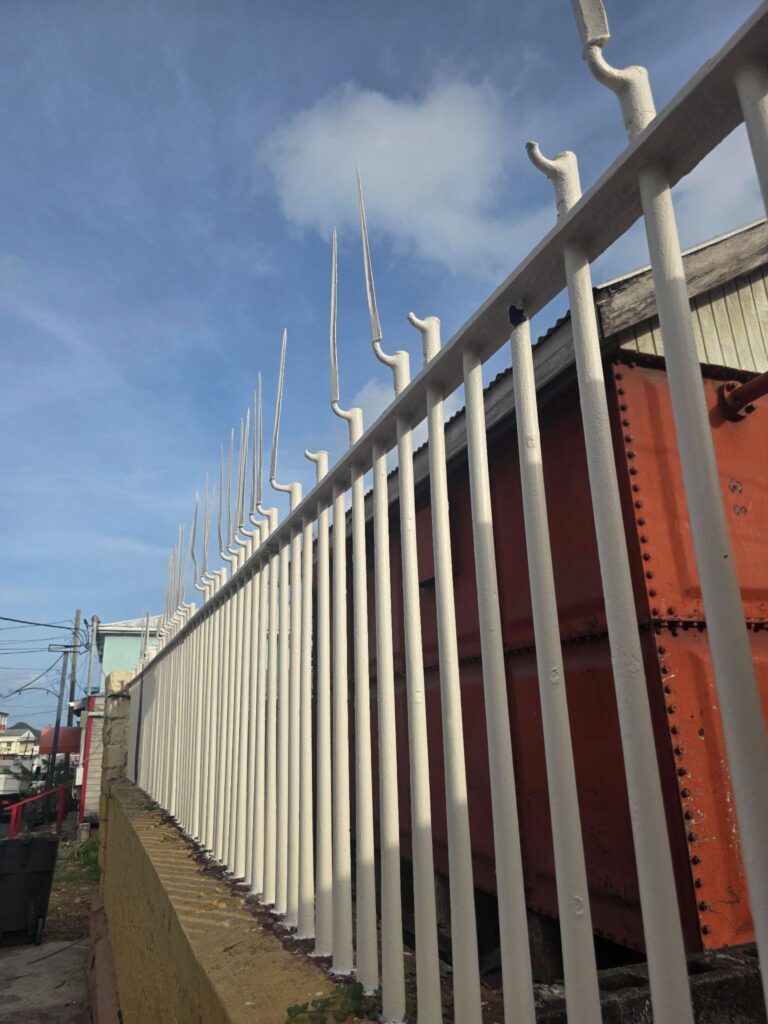
Across Church Street from the Museum, the Police Station yard has a unique iron railing, composed of Long Land Pattern Brown Bess muskets and bayonets, weapons used by the Antigua militia during slavery. These…
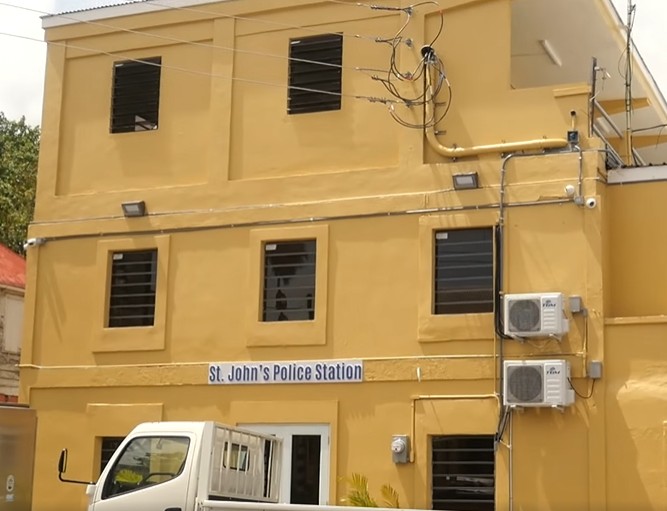
The St. John’s Police Station is situated across Church Street from the Courthouse (now the Museum), making it easy to transport prisoners to court. The building was erected in 1772 and has been modified…
Church Street from Market Street to the Anglican Cathedral
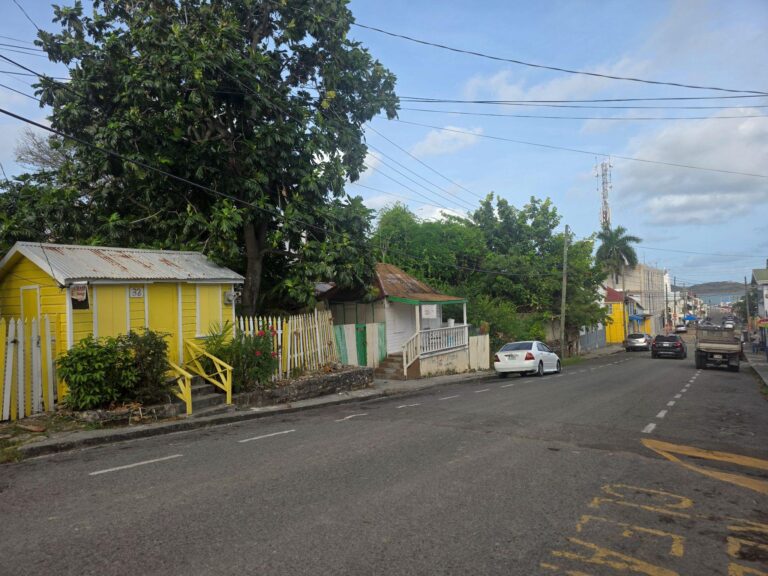
These smaller buildings are fine examples of simple Antiguan vernacular design, raised on masonry “skirts” with weatherboard “blouses” above. Modest materials were used creatively: shingles saved money on side elevations, while varied weatherboarding, shiplap,…
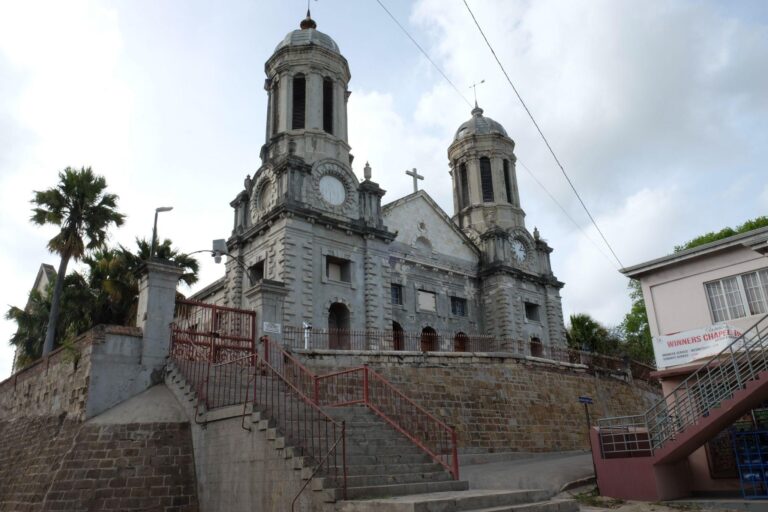
St. John’s Cathedral occupies an Anglican site used since 1681, with earlier timber and brick churches preceding it. After the 1843 earthquake, Governor Sir Charles Augustus Fitzroy laid the cornerstone for the present freestone…
This large house was originally owned by John Joseph Camacho, the elder brother of E.O. Camacho. When John Joseph’s widow died in 1971, she willed the property to the Catholic Bishop, who resided there…
St. Joseph’s Roman Catholic Church and Holy Family School
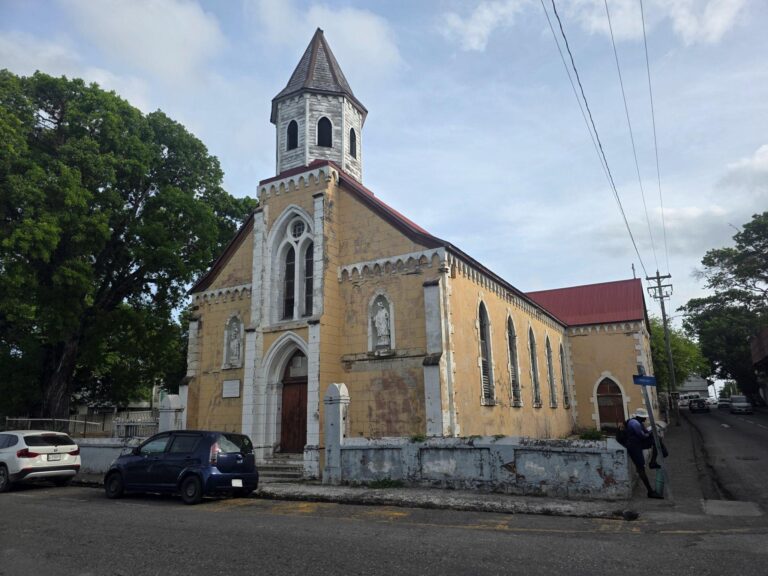
Built in 1909 to accommodate the growing Portuguese congregation, St. Joseph’s was badly damaged in the 1974 earthquake but was restored and in use until 1987. The roof and steeple were repaired in the…
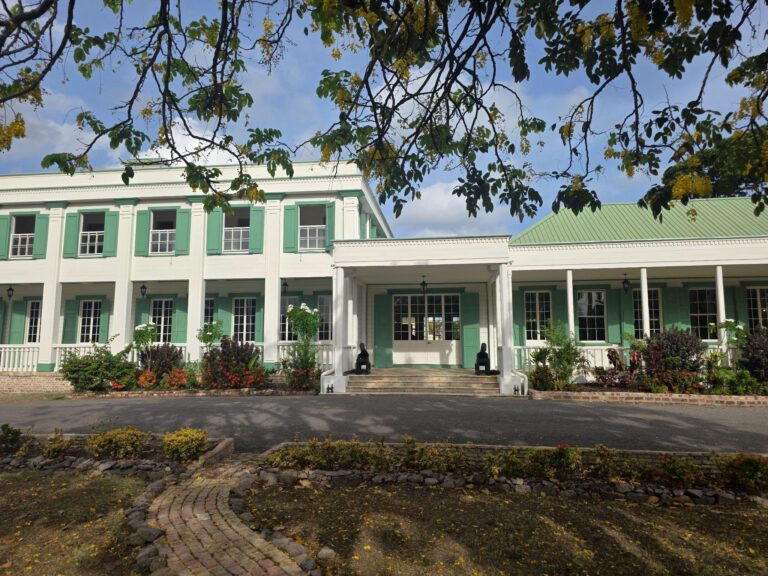
Government House became the official residence of the Governor in 1801. Like so many historic public buildings, it has grown organically over time as subsequent generations have added to it. In 1841 it was…
Twelve further stops, marked on the dashed extra route.
1
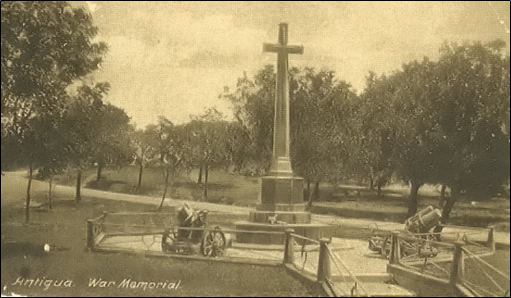
War Memorial
The War Memorial, a cenotaph (a monument erected in honour of someone whose remains lie elsewhere), was unveiled on August 24, 1919, in memory of those Antiguans killed in World War I. Remembrance Day…
This building was the residence of the Wyam family around 1915 and then of the Scott Johnson family in the 1930s. Edward Scott Johnson was manager of Bryson’s and a director of Antigua Syndicate…
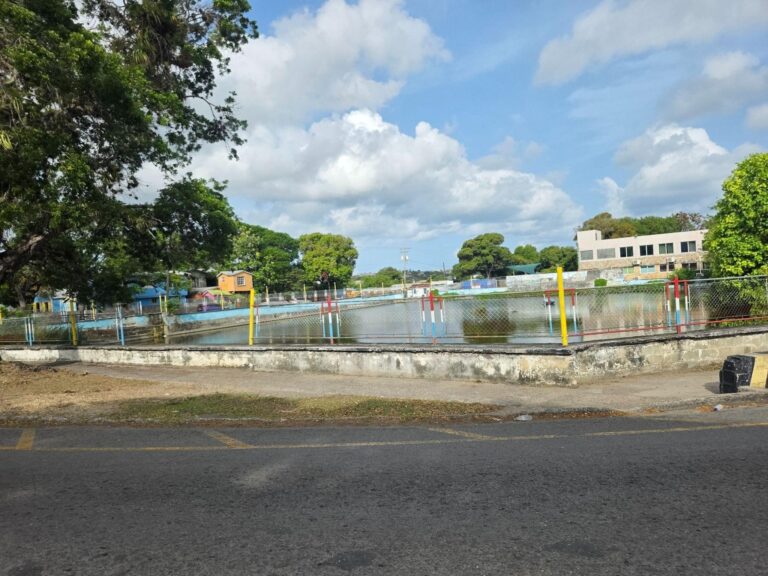
Country Pond was once an elegant spot in St. John’s. This early image is from Trelawney Wentworth’s West India Sketchbook (1834). Note the early version of the Cathedral in the background, before the 1843…
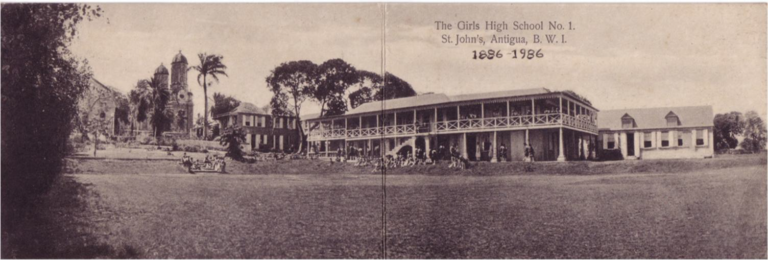
The Antigua Girls’ High School was founded in 1886 by Elizabeth Williams, an English schoolmistress who came to the island in search of a good climate for her husband. The school occupied a building…
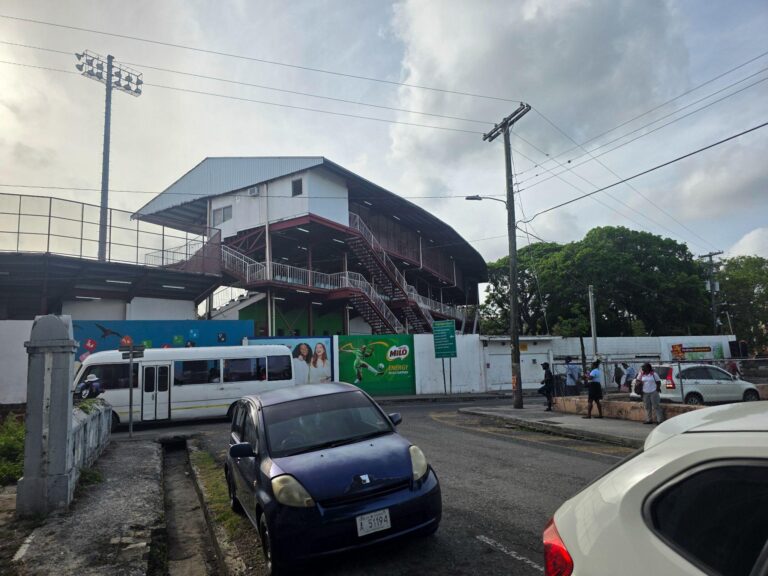
The stands at the Antigua Recreation Ground were built in the late 1970s, just as the ARC was cementing its place in cricketing folklore as the pitch where many a record was broken by…
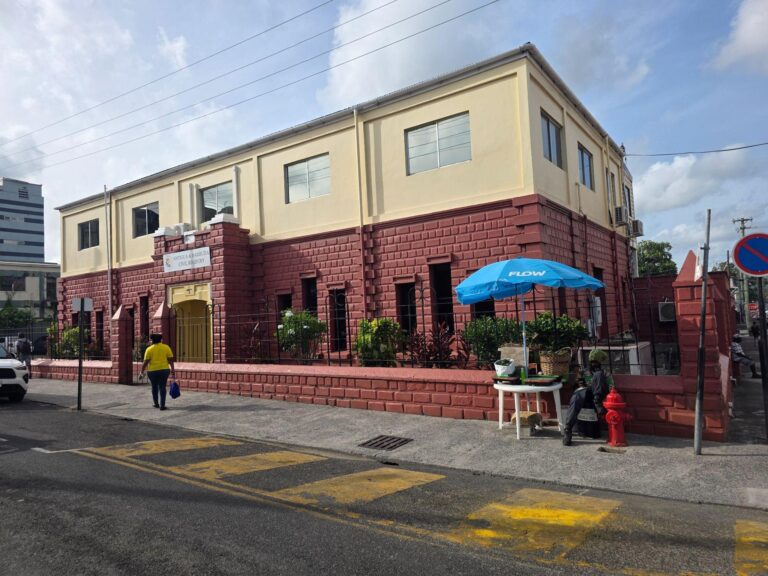
Convent School (Antigua and Barbuda Civil Registry)
This building has had many uses. This picture from the 1890s suggests that it might have been a house, but in the 1930s, it housed the Convent High School, the first Catholic secondary school…
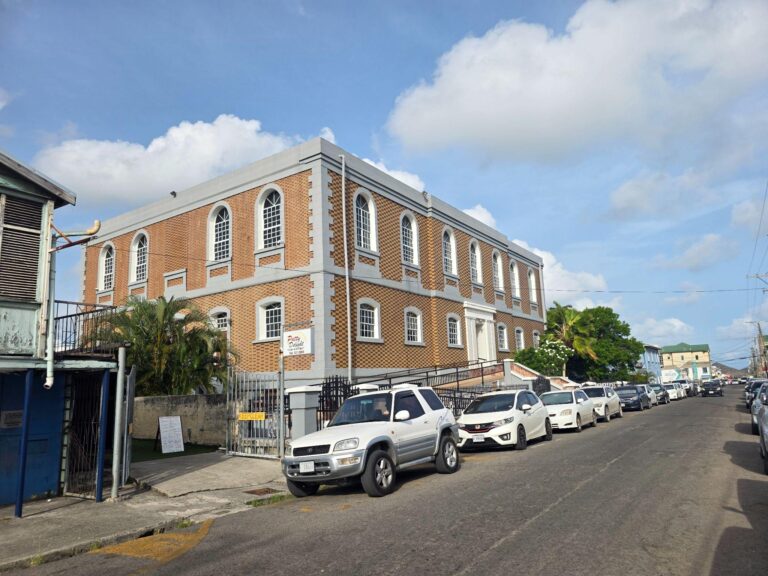
Methodism was introduced in Antigua in 1760 by Nathaniel Gilbert, Speaker of the House of Assembly and owner of Gilbert’s Estate, after hearing John Wesley preach in England. Three slaves kept the preaching alive…
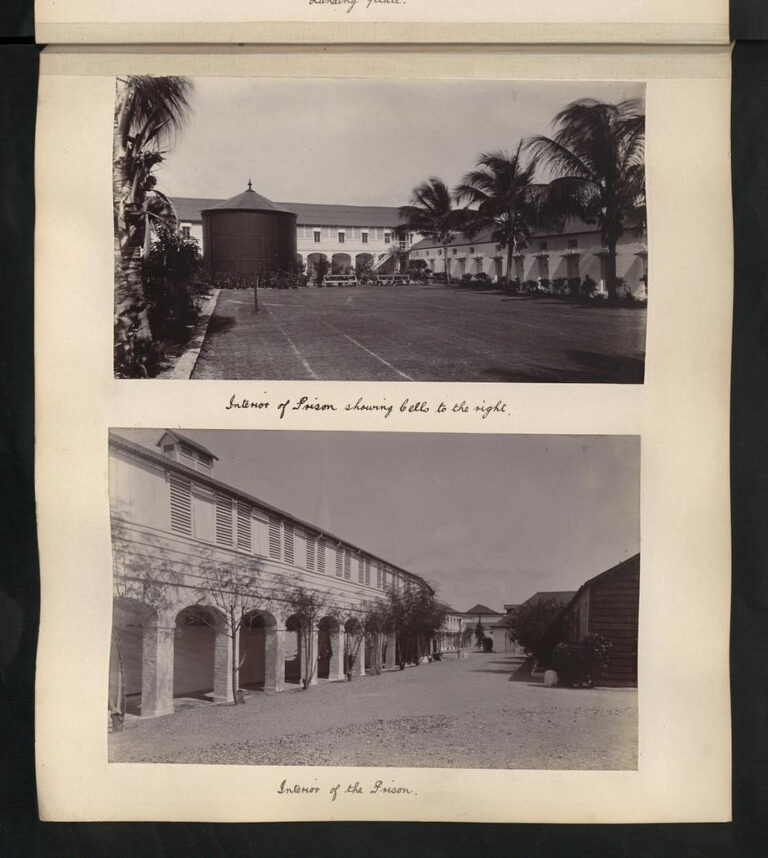
His Majesty’s Prison, sitting across from the Antigua Recreation Grounds and infamously known as “1735,” is housed inside an old British Army barracks. Antigua had a continuous presence of British soldiers from 1707 until…
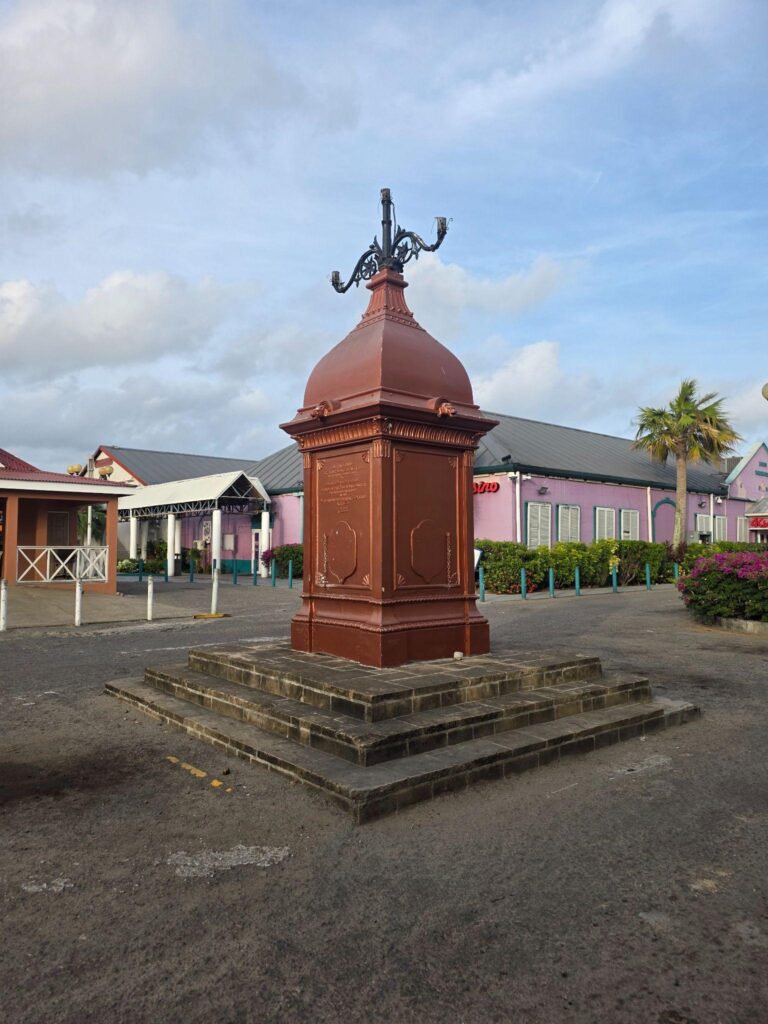
The Westerby Memorial was built in 1892 to commemorate almost fifty years of Bishop Wall Westerby’s Moravian missionary work in Antigua. Prior to the building of the Deepwater Harbour, ships anchored out beyond the…
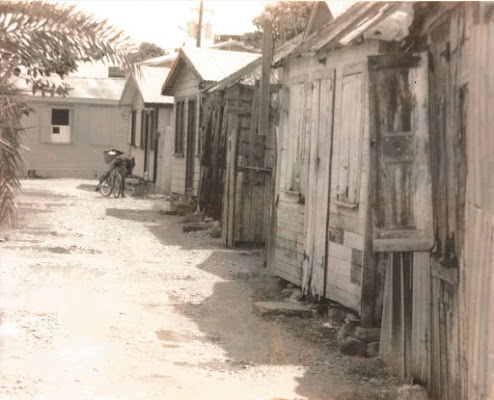
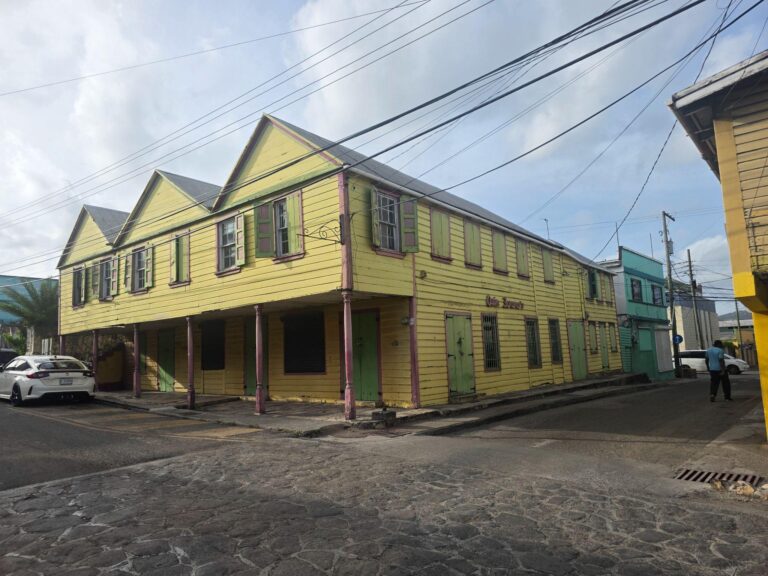
In the XXX, the Quin Farara building housed a Christmas speciality store on one side and “Little Joe” De Freitas’s rum shop on the corner. The first Farara arrived in Antigua from Madeira in…
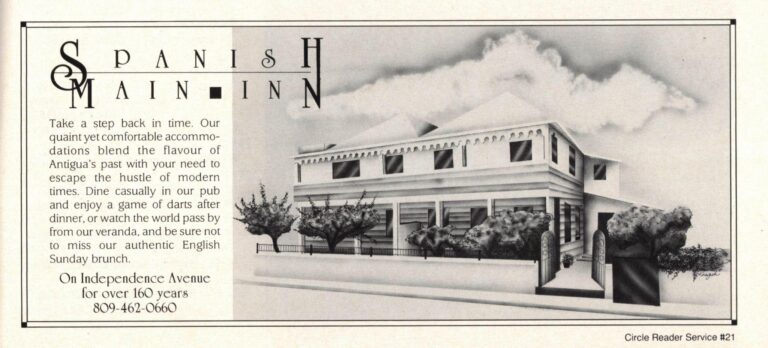
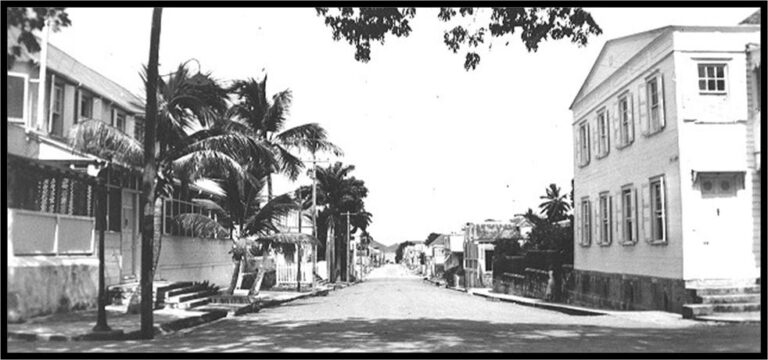
The upper part of St. Mary’s Street had a number of elegant residences, particularly those along East Street (now Independence Avenue). This photo shows the corner of St. Mary’s Street and East Street (now…