

Market Street (Scotch Row)
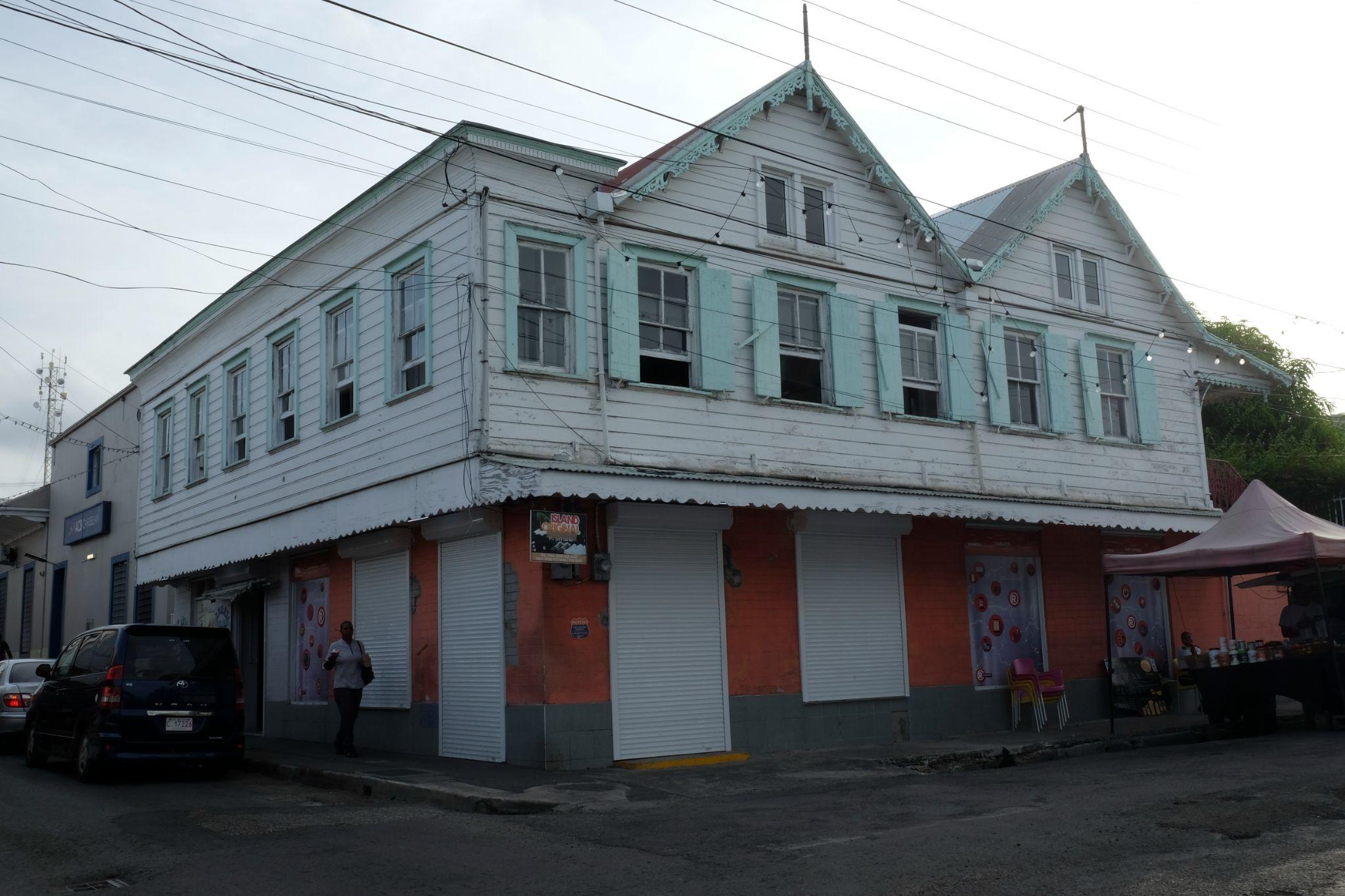
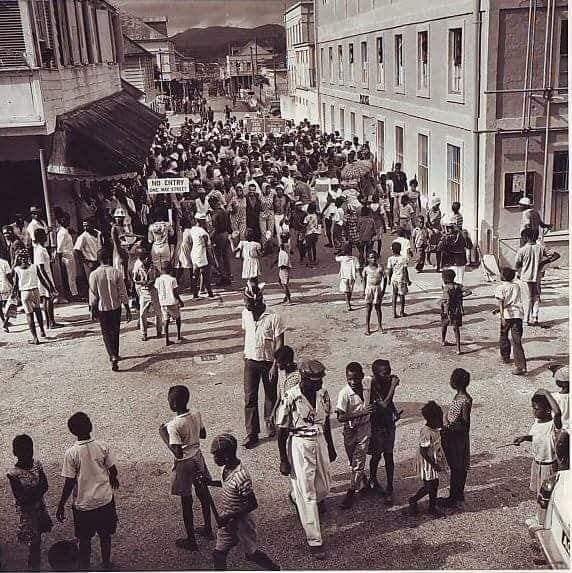
Market Street, originally called Scotch Row, was named for the Scots who arrived in Antigua in the 1800s and came to own most of the larger stores in town. After World War I, they sold to the Antiguans who had worked for them. One example is this store on the corner of St. Mary and Market streets. The building has a masonry ground floor, side stairs with elaborate wrought-iron railings leading up to the living quarters, wood shutters and an ornamental parapet.
Moving Up
David Torry’s store, at the corner of Redcliffe Street and Market Street, tells a similar story but one we know more about. Torry came to Antigua from Scotland in the early 1880s to clerk for a merchant named Alexander McAdam and rose to be chief clerk, a post he held for many years. Torry married the sister of another Scots merchant and finally bought the store in 1901. When he died in 1917, his widow migrated to Canada, leaving the store in the charge of their chief clerk, an Antiguan descendant of an enslaved person named Richard Pigott. His brother Jim bought the store for him. The original building (shown on the right in the picture below) was torn down to build Piggot’s Mall, which is still there. Note that this picture is looking south on Market Street.

Jim had been a clerk for another Scots merchant, W.R. Dobson, who owned a wharf-front export firm at the bottom of Redcliffe Street.
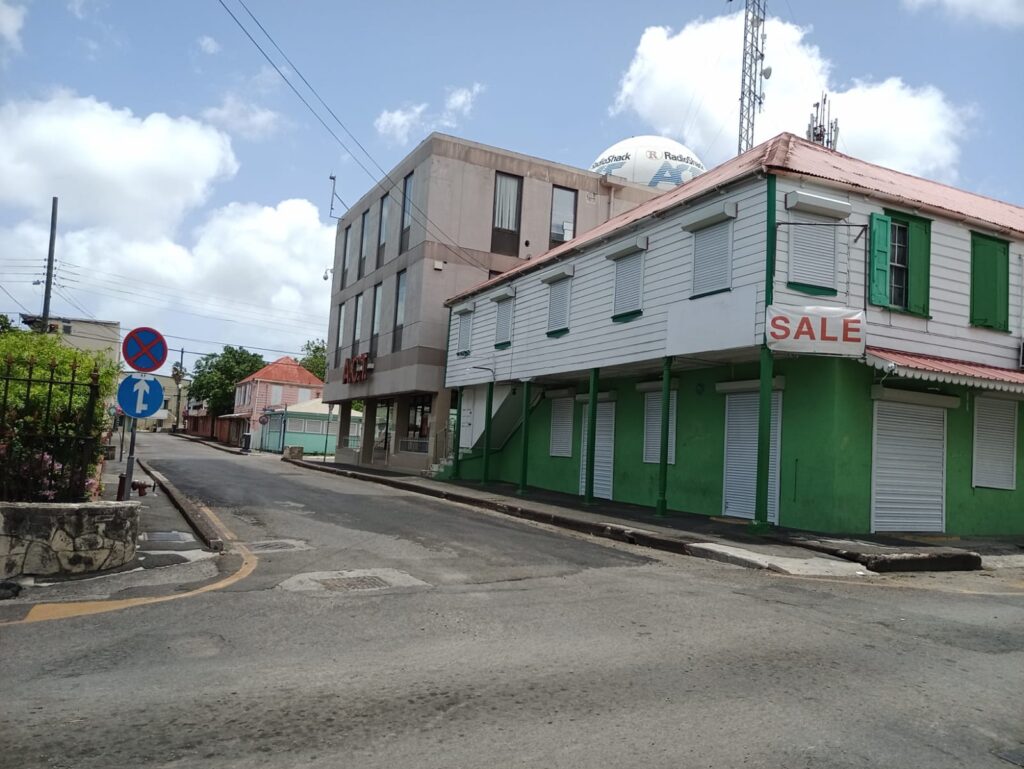
A slightly different example is Delos J. Martin, who owned a large building at the corner of Church and Market Streets, now the ACT building. His story dates back even further, to the free coloured men and women, descendants of slaves who had been freed before emancipation in 1834.

In the late 1800s, Le Roy Delos Jeaffreson Martin was one of a number of coloured men who called for the extension of the franchise by lowering property qualifications and adding a salary qualification (rather than solely property ownership). In 1898, he was appointed to the Legislative Council to represent the “coloured community,” which meant those men and women who were fair-skinned and often related to early free colour families. In 1897, he was one of only four non-white merchants listed in Lightbourne’s business directory. He was married to a coloured woman named Louisa Thibou, who likely also had roots in the free coloured community and who had her own store in town. When Delos Martin died in 1914, his store was taken over by his manager, Arthur Hughes, who then sold it in 1937 to John Lushington Jeffrey–still another coloured gentleman.
This photo is from 1977.
The Delos J. Martin store was replaced by the ACT building, as shown in the photo below.
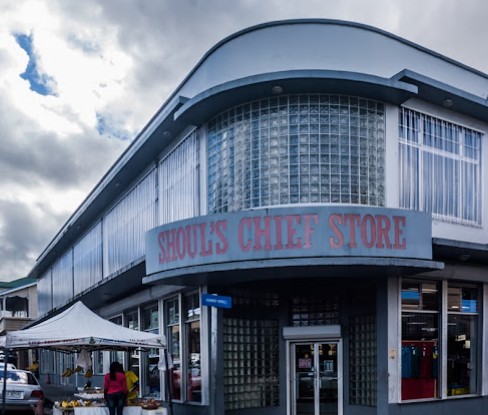
On the other side of St. Mary’s Street is Shoul’s Chief Store. This store has changed dramatically over the years. This is a painting of the store before it was modernized.
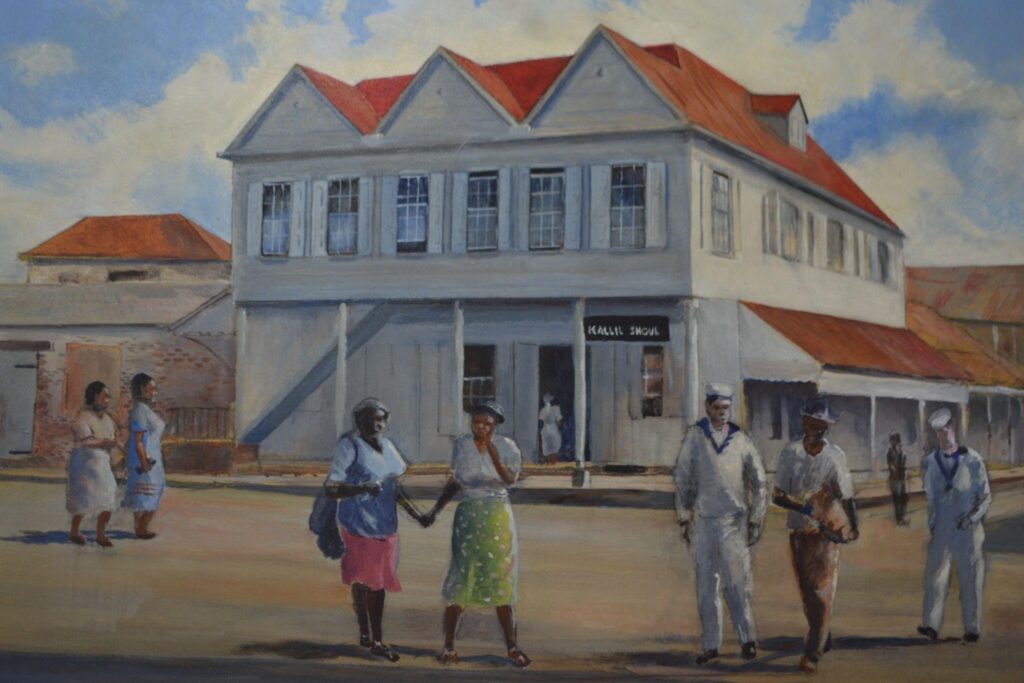
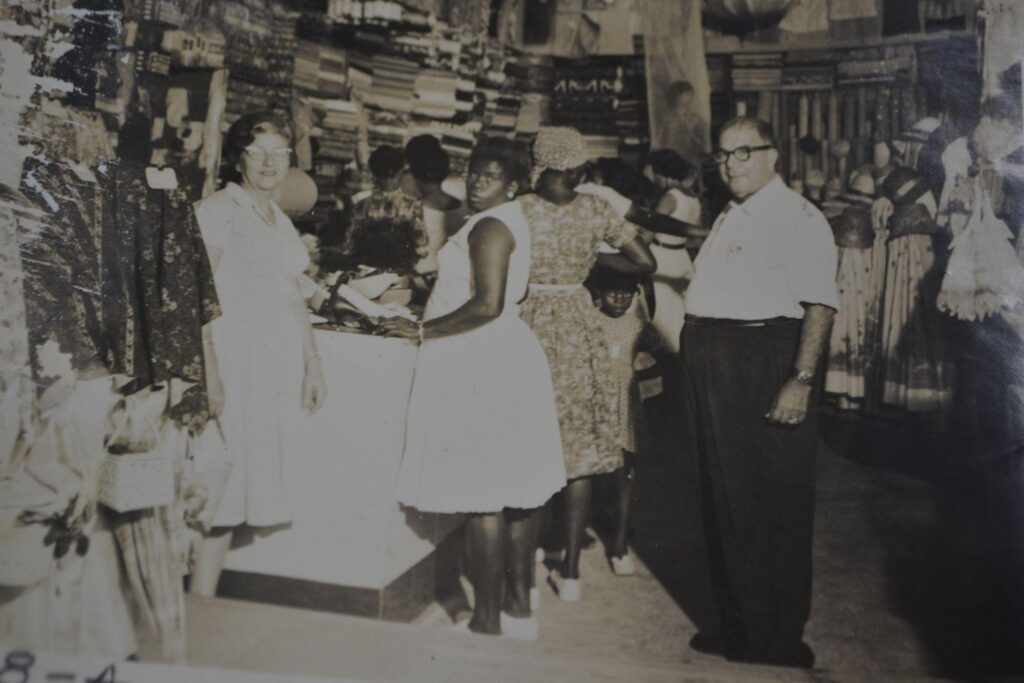
The Shoul family represents another kind of upward mobility. The Shouls–and other Lebanese families, with surnames such as Michael, John, and Khoury–came from an area of Mt. Lebanon called Bazoun, in what was to become Lebanon. The Shouls arrived in 1908 or 1909. During World War I, the British considered them enemy subjects because they were citizens of the Ottoman empire but the Governor defended them as hardworking and not dangerous, so they were not interned. The earliest came as itinerant traders or peddlers, in the city or countryside, but by the 1930s they had opened stores–including Shoul’s Chief Store–in the center of town, selling dry goods and relying almost entirely on family labour. Most specialized in fabric. This photo shows the interior of Shoul’s Chief Store in the 1950s.
market street with o'Reilly