
St John’s Cathedral
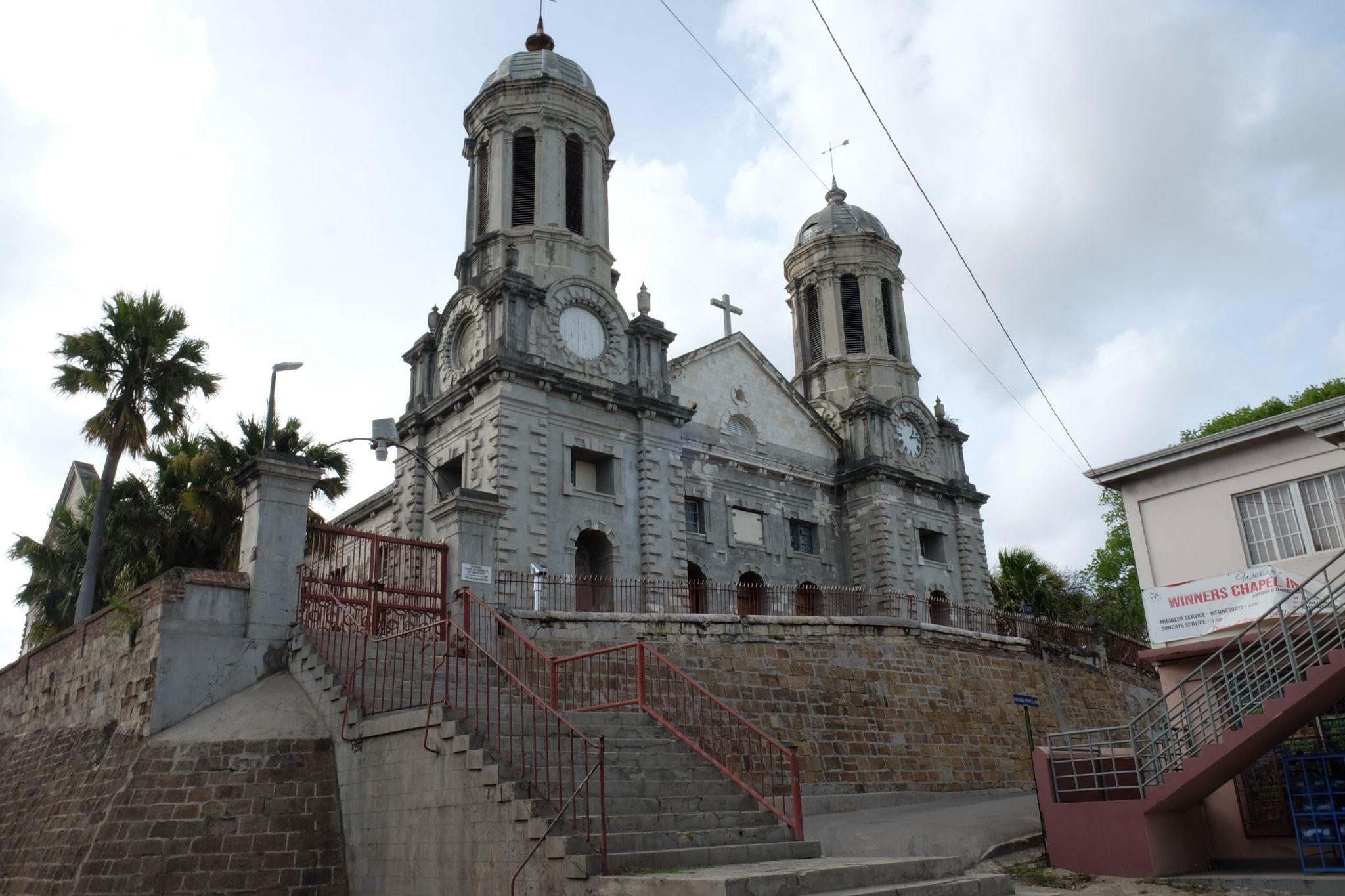
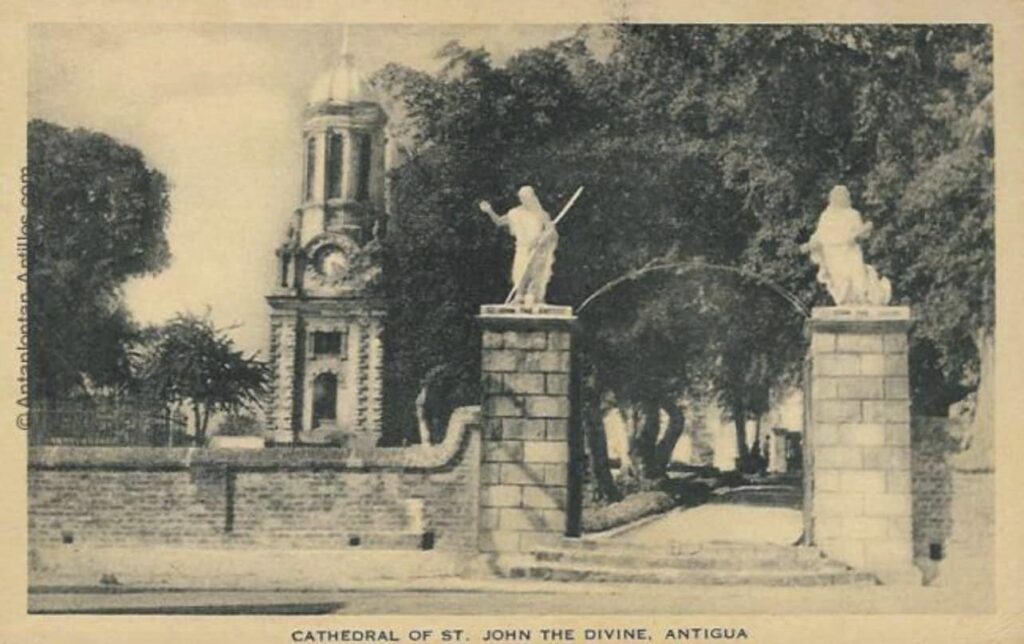
St. John’s Cathedral occupies an Anglican site used since 1681, with earlier timber and brick churches preceding it. After the 1843 earthquake, Governor Sir Charles Augustus Fitzroy laid the cornerstone for the present freestone building, opened in 1847 and consecrated in 1848. Designed by J. Fuller of Bath, its pitch-pine interior, twin towers and iron gates frame statues of St. John the Divine and St. John the Baptist, captured from a French ship bound for Martinique in 1756.
The Cathedral, officially the Cathedral of St. John the Divine, was originally a wood structure that was built in 1681 and replaced by a stone structure in 1722, as depicted in this painting of the Cathedral in the 1700s. The statues of St. John the Divine and St. John the Baptist, standing on either side of the entry gate, were captured off a French ship heading to Martinique during the Seven Years War in 1756.

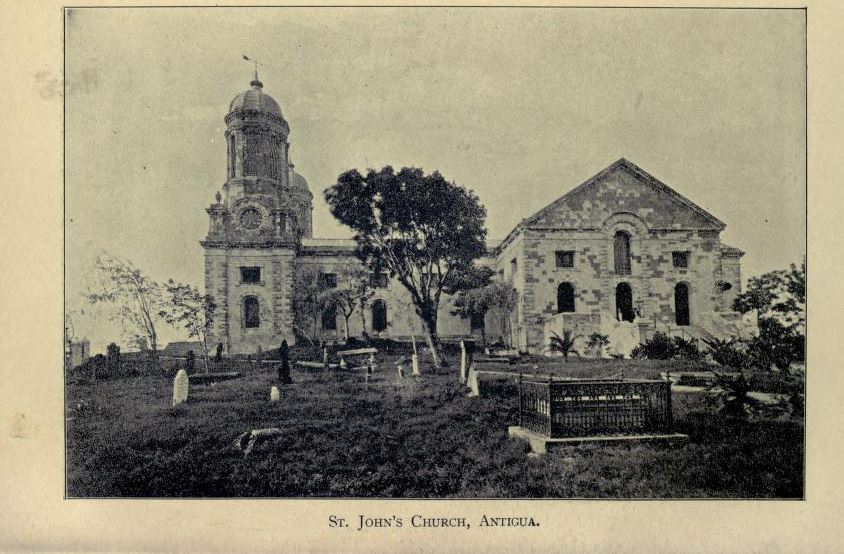
The 1843 earthquake badly damaged the building. Reconstruction was completed in 1847 and the Cathedral was consecrated on July 25, 1846. This photo, which shows the graveyard sparsely filled, is from 1893.
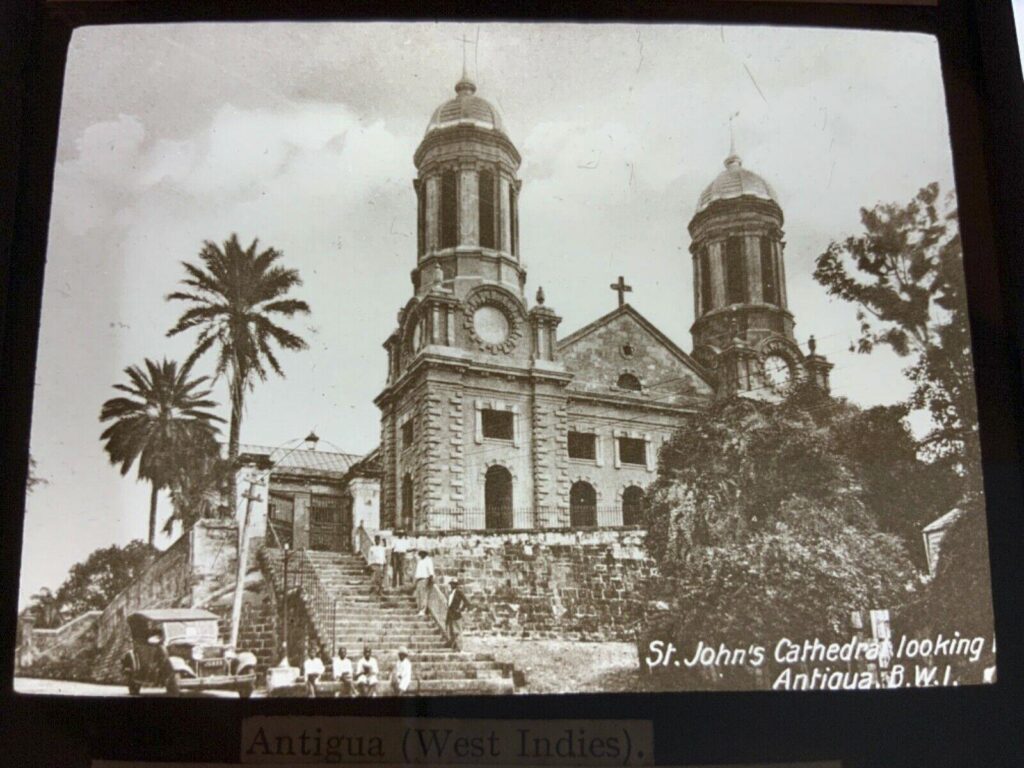
Built of freestone, the current building was designed by the architect Mr. J. Fuller of Bath and the Clerk of Works, Mr. F. W. Rowe of Bristol, England. It is dominated by twin towers that originally were severely criticised as being like “a pagan temple with two dumpy pepperpot towers.” Now, however, this edifice has been praised as “the most imposing of all Cathedrals in the West Indies.” This photo is from the early 1900s.
The wood-encased interior has enabled the building to withstand several natural disasters, including the 1974 earthquake and major hurricanes in 1989 and 1996.
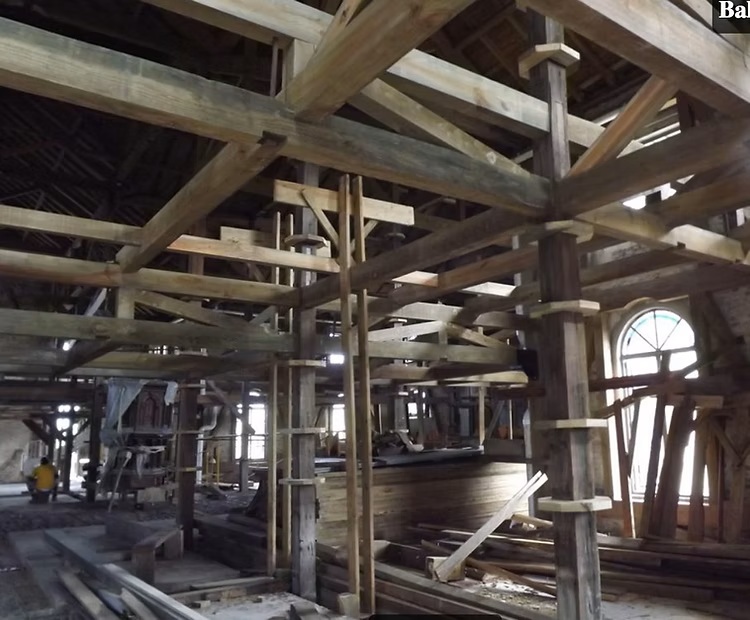
Below is the interior today.
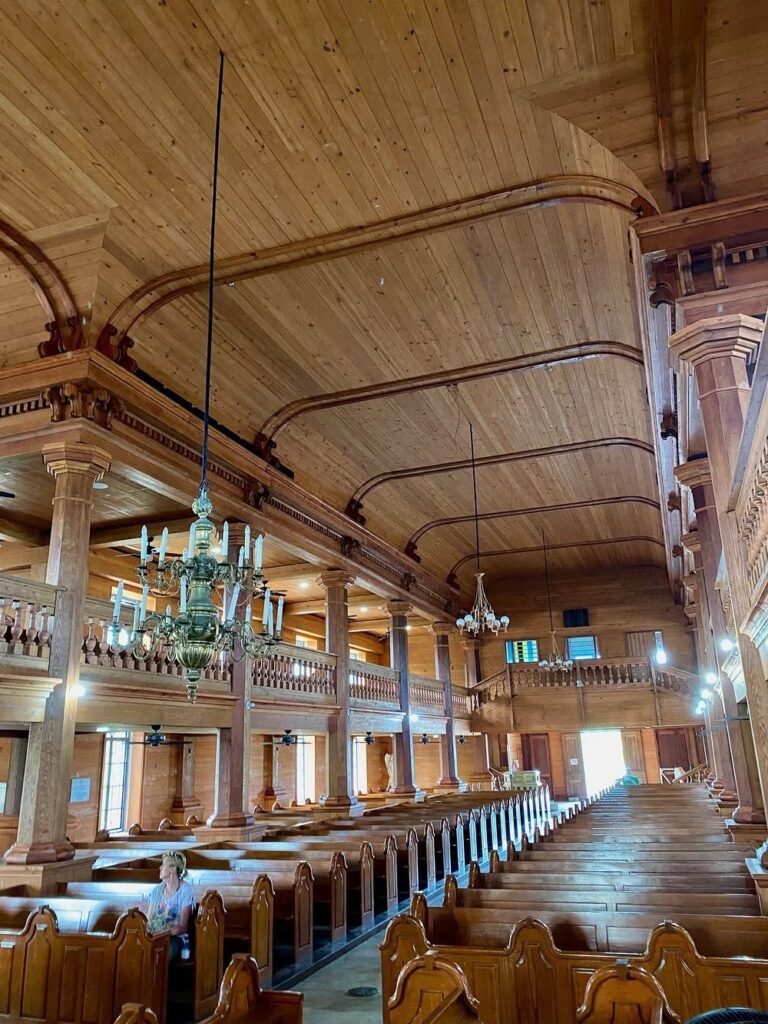
The interior renovation included the chandeliers, as described here.
The statues of St. John the Divine and St. John the Baptist, standing on either side of the entry gate, remain. This photo is from 1960.
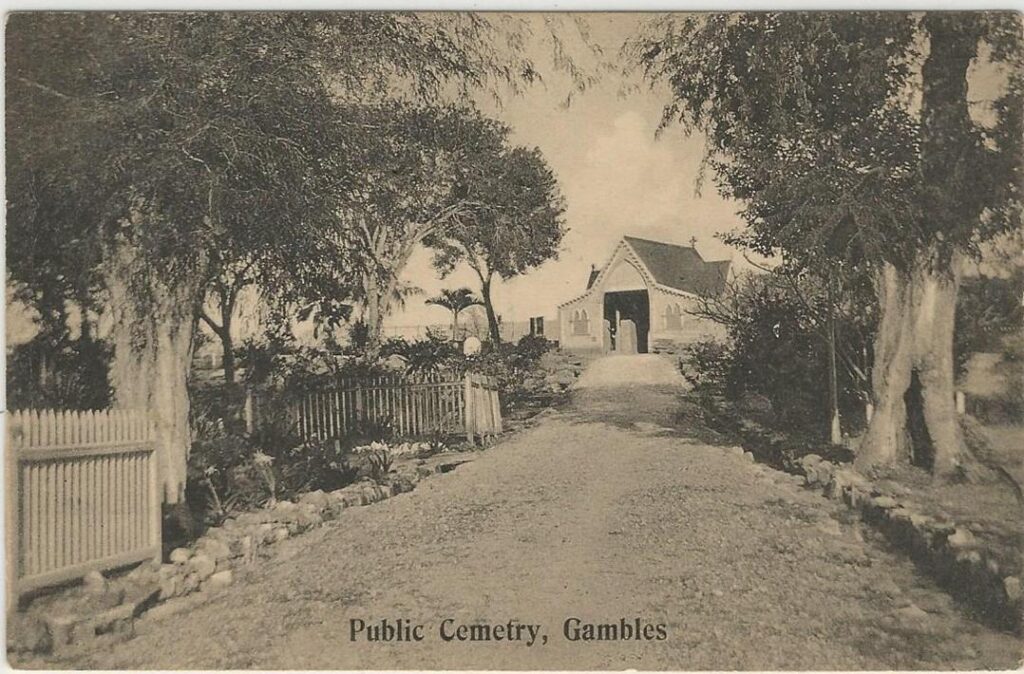
The oldest tombs, and plaques inside the church, belong to early planter families. The graveyard stopped allowing burials in the 19th century, as the Colonial authorities shifted burials to the St. John’s Public Cemetery.