

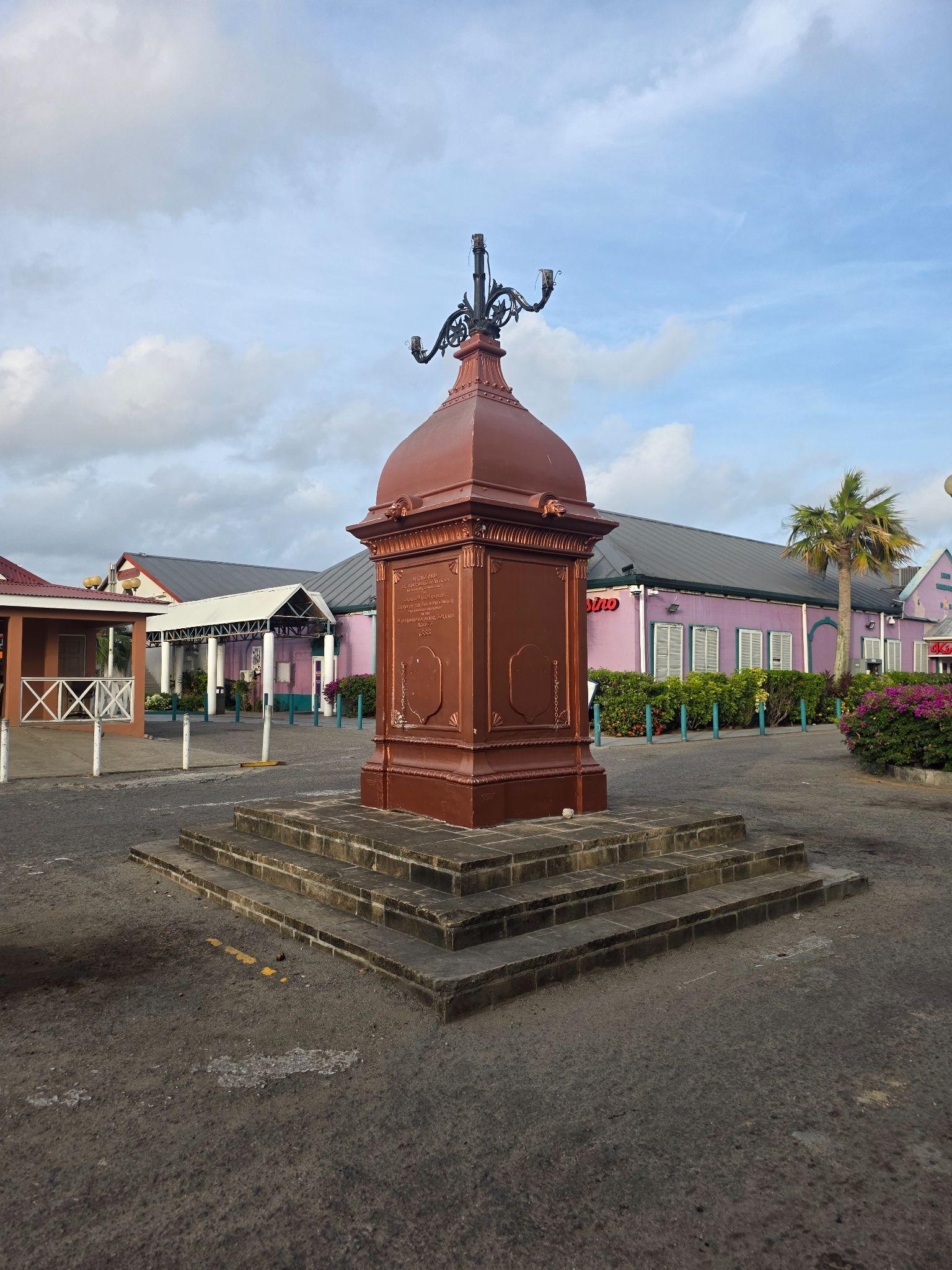
Westerby Memorial and Lower High Street
The Westerby Memorial was built in 1892 to commemorate almost fifty years of Bishop Wall Westerby’s Moravian missionary work in Antigua. Prior to the building of the Deepwater Harbour, ships anchored out beyond the sandbar in the bay and used lighters to bring in goods.
The Westerby Memorial
This photo shows the memorial today. In the background is King’s Casino, which is where the King’s Warehouse stood. These large warehouses were used to store goods before they were shipped to England.
This photo shows King’s Wharf in 1923, when the warehouse was a wooden structure.
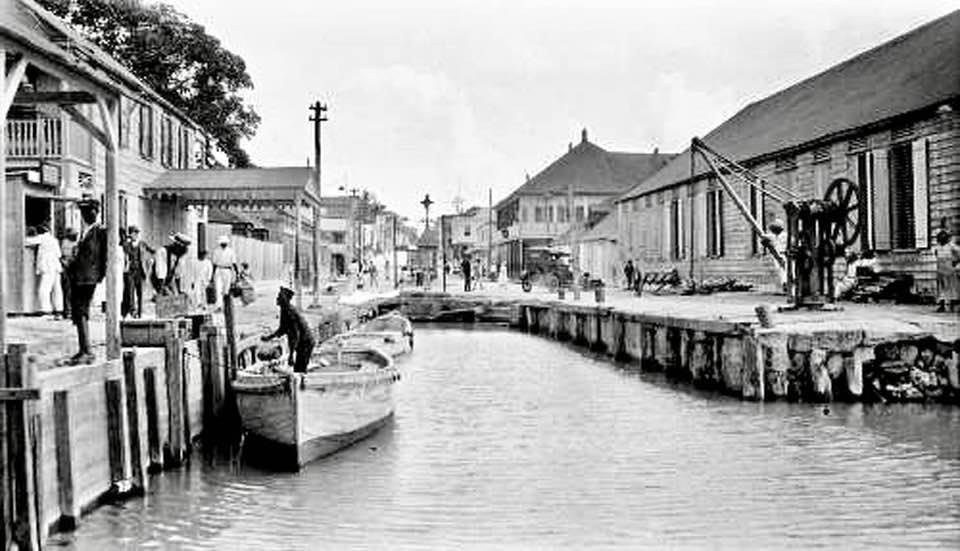
This photo shows King’s Warehouse in the 1980s.
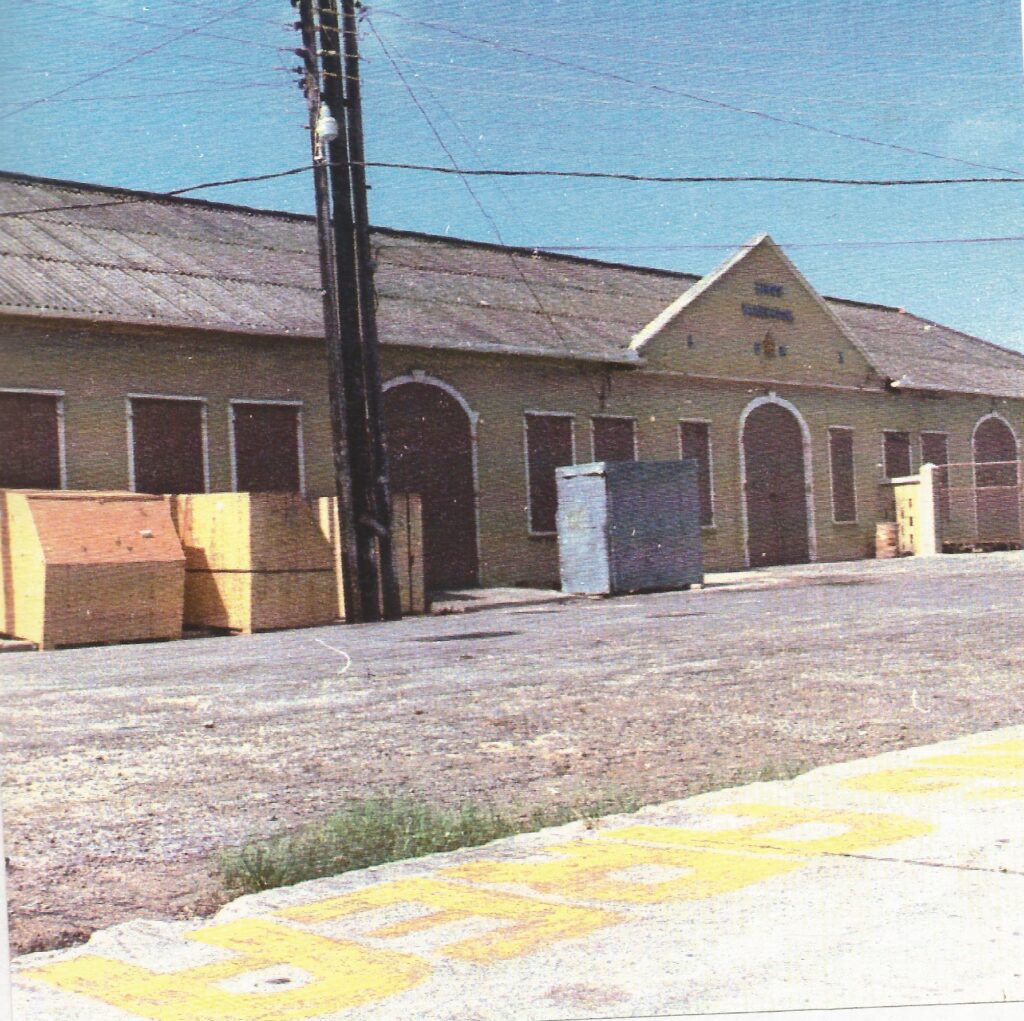
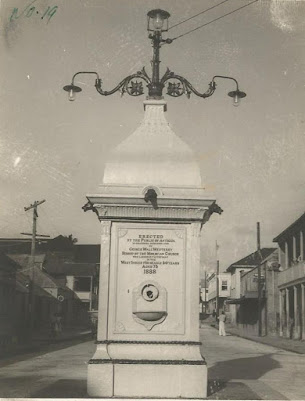
The photo below, from the early 1900s, shows the memorial with Custom’s House in the background. Victorian in style, the memorial once sported gas lamps and drinking fountains on all four sides.
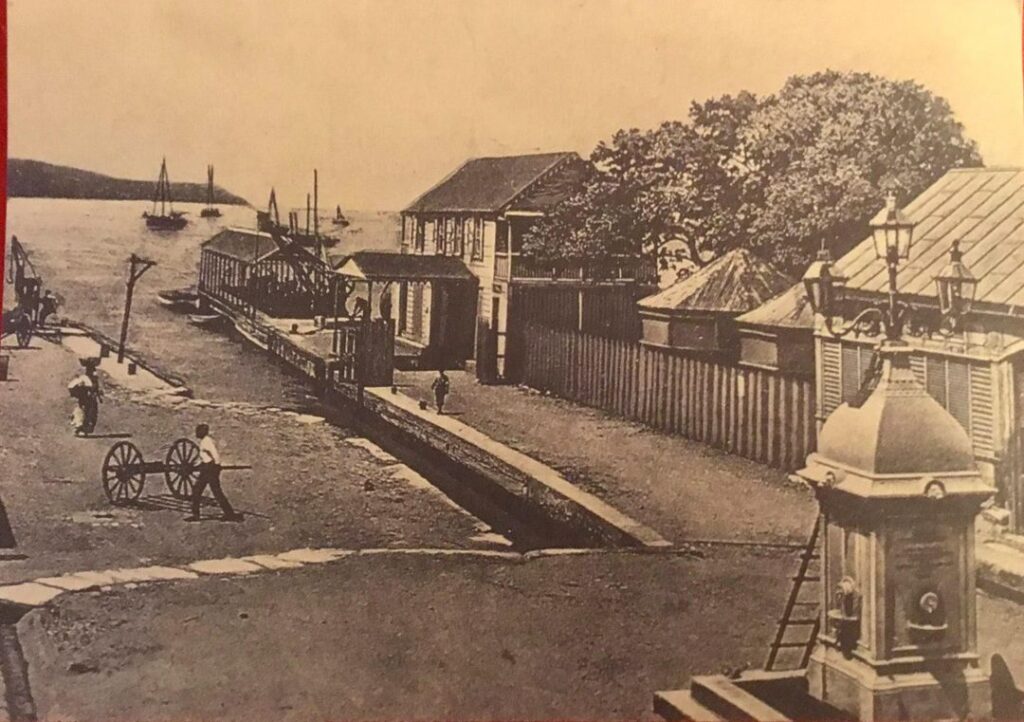
According to the Antigua Observer of November 25, 1886, George Wall Westerby was born on March 20, 1812 in Edinburgh Castle. He was of Yorkshire parentage. He was ordained deacon on August 28, 1838, and left for Antigua immediately after with his wife, arriving on October 6, 1838. He was Superintendent of the Moravian Mission in Antigua from 1848 to 1872. Between 1872 and 1875 he also acted as Inspector of Schools. He resided in Montserrat from May 1875 until June 1880, where he established a school at Olvestone. On his return to Antigua in 1880 he again became Superintendent ad interim, and remained so up to the day of his death on November 22, 1886.
In 1840, he and his wife founded the Female Teachers’ Training School in their home in Antigua. It later grew into the Spring Gardens Teacher Training College, which drew women from the Leewards, Windwards, and Barbados. He was also a strong supporter of the elevation of descendants of enslaved people into the clergy, including the Rev. John Andrew Buckley, the first man of African descent to be ordained in the Moravian church.
The memorial is a very distinctive product of Victorian industrialism, linked to the rise of foundries in such cities as Glasgow or Liverpool and then shipped around the Commonwealth. This one was made by Geo. Smith & Son, Sun Foundry, Glasgow. Glasgow was known as the Second City of the Empire, a centre of iron manufacturing and export. Many of these same products can be found as far apart as the Caribbean and India.
The lamps were electrified in the 1950s. The next photo shows the Westerby Memorial in 1954, after electrification.
The Treasury and the Library
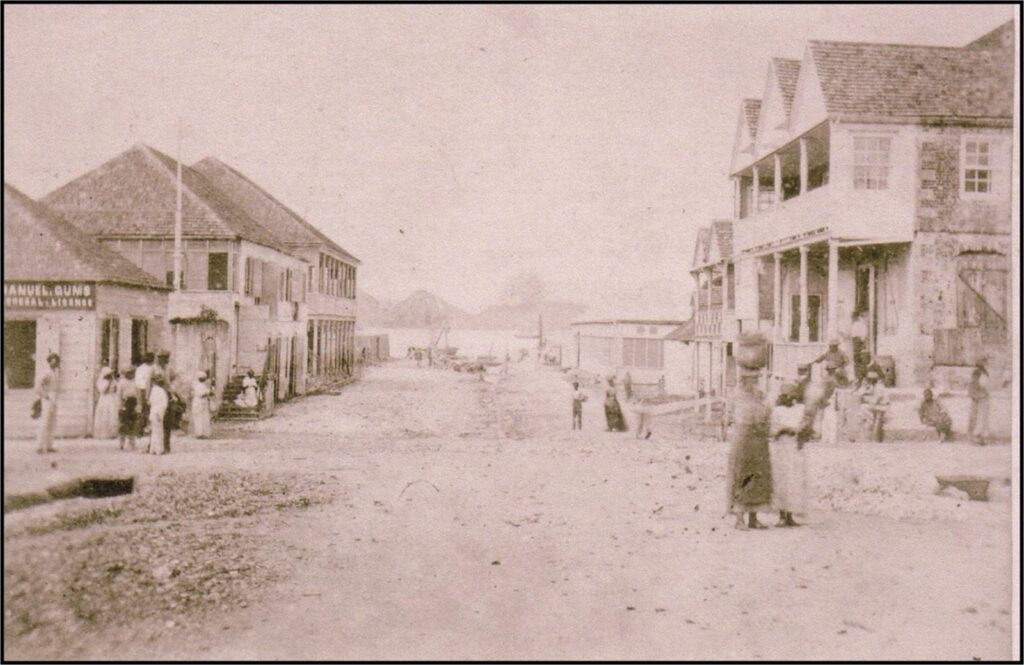
This 1860 photo shows the area before the Westerby Memorial was built. The Treasury is on the left, with the Library upstairs in the Treasury building.
This photo from 1900 shows the Treasury and Library in more detail. On the left is a tavern run by Mary Gonsalves.
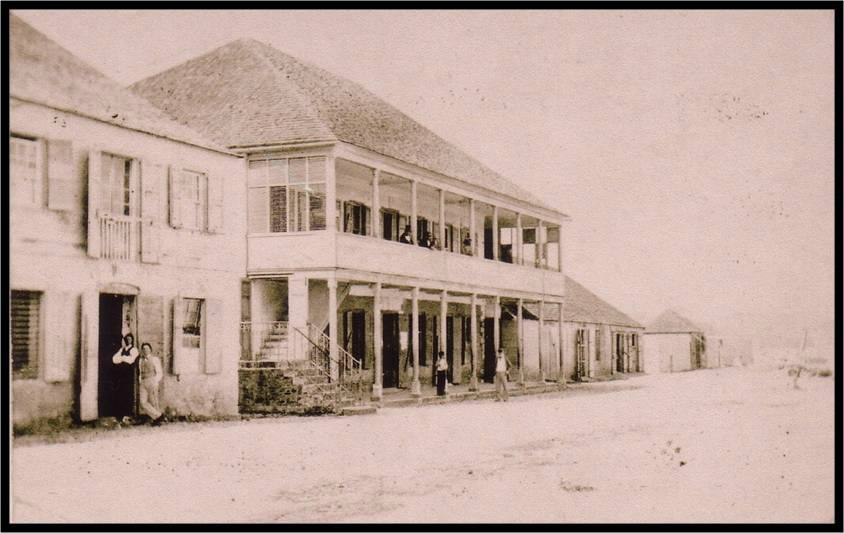
The Antigua Library Society was founded in 1830 as a subscription-based private organization whose members were selected by ballot. It was incorporated by an act of Parliament in 1839 and by 1840, it was reported to house over 5,000 volumes. It is important to note that most of those involved came from the former free colored community, which was particularly interested in education for the local population.
When the 1843 earthquake partially destroyed the library, a number of competing libraries were established, members stopped paying fees, and the Antigua Library Society faced bankruptcy. In 1854, the government agreed to assume ownership, although the library was managed by local trustees.
In 1974 another major earthquake badly damaged the building and the library was moved temporarily to a new location upstairs the Silston's Library on Redcliffe Street. In 1978 it moved into a cramped space upstairs in the Lolita's Building on Market Street. The building was condemned and torn down in the 1990s, but not without a lot of citizen protest.

Construction on a purpose-built building on the eastern edge of town began in 1987 and, after many starts and stops, was finally completed in 2014.
Bryson’s Bottling Plant
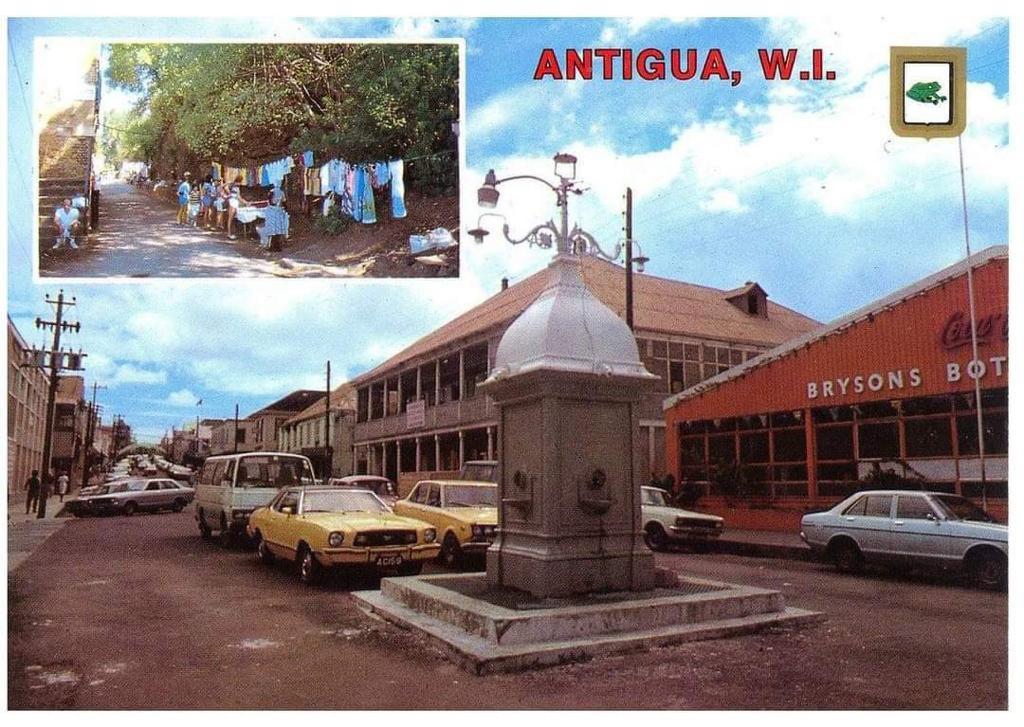
This postcard, probably from the early 1970s, shows Bryson’s Bottling Plant on the right. Coca Cola was bottled there until the 1974 earthquake, using Coca Cola’s secret formula but local cane sugar so it tasted different. The Public Library and Treasury can be seen above the bottling plant.
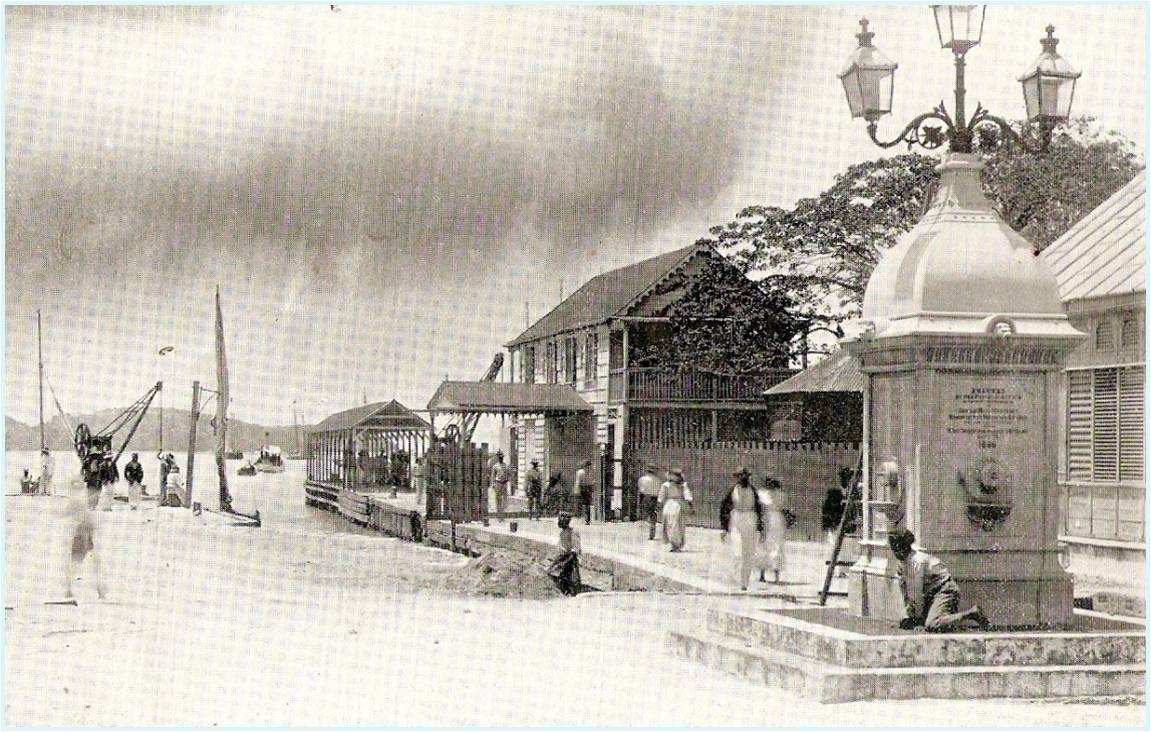
wharf and customs house and westerby memorial 1907